I’ve been directing and producing corporate and broadcast video for over 30 years. A lot of that work involves finding creative ways to make the best use of the resources available. There’s usually a gap between the film you can see in your head and what you can achieve with the budget, locations and footage you have.
On a recent project, generative AI helped me close that gap.
The original plan
The project was for Opses, who make a very clever box of tricks called VERTO. It enables emergency services and roadside recovery operators to control specialist equipment through their vehicle’s factory-fitted touchscreen.
The brief was to create four short videos explaining what VERTO was, how it connected and the advantages it offered.
I’ve always enjoyed bringing technically complicated subjects to the screen and making them accessible, so I was looking forward to the challenge. I priced the production around traditional techniques, including a day’s shoot, reusing existing footage, sourcing library footage and having some 3D models and animations created.
Before starting, I checked with Opses about their attitude to AI. I explained that it could enable us to produce a better set of films with the same resources. They were happy for me to use it where appropriate.
Graphic design
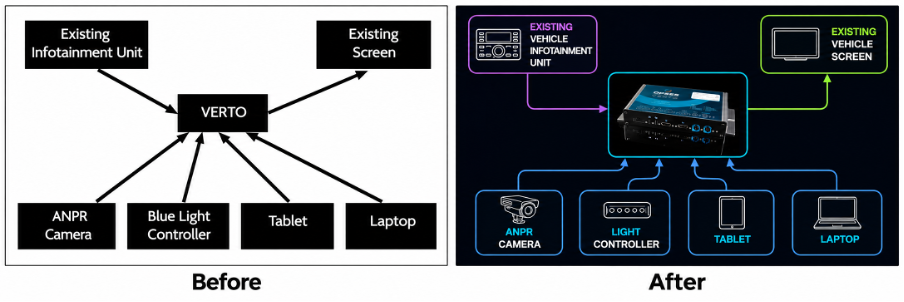
Early on, I knew I wanted block diagrams explaining how VERTO fitted into a vehicle’s existing systems.
Much as I would when briefing a graphic designer, I sketched what I thought they should look in Paint and asked AI to make it look pretty. With some tweaking, we arrived at something I was very happy with.
I still used traditional editing techniques to animate the graphic. I had worked out the structure and what it needed to communicate, while AI helped develop its appearance.
Showing the product
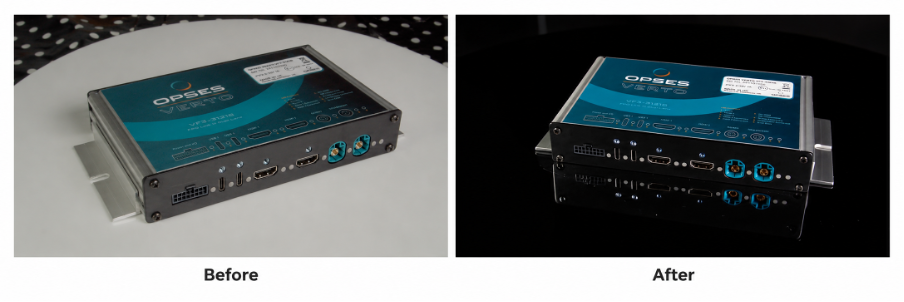
I also wanted to show the VERTO box itself, as its physical form helped bring home what the unit was.
I filmed it on a turntable and, to be honest, it looked pretty good. But I wanted to explore a more polished finish, so I used AI to replace the white background with a reflective black surface. It gave the shot the high-end look I had in mind.
Our imaginary drivers
The films feature a police car, an ambulance and a roadside recovery van. With each vehicle, I found myself progressively using more AI to bring the sequences to life.
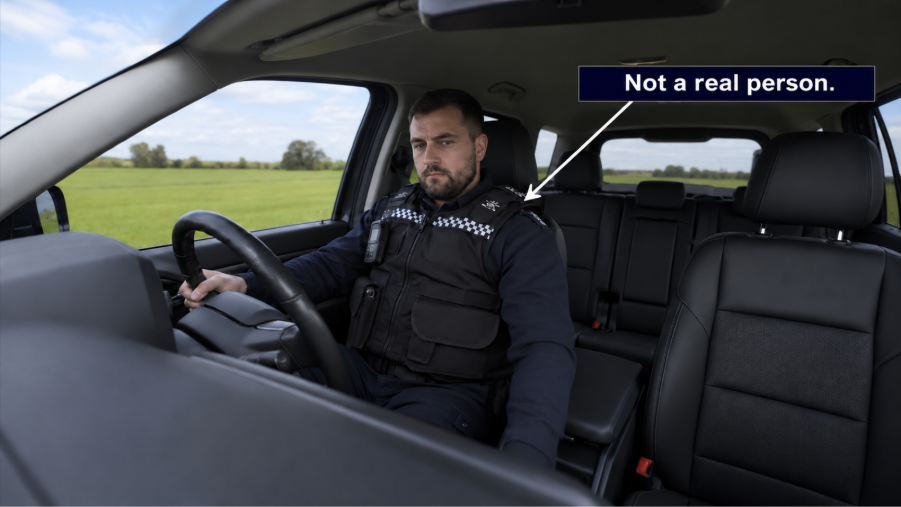
For the police car, we filmed a real vehicle from outside and through the windscreen. It was being driven by my client, so I asked AI to create a reverse shot showing a police officer driving. The synthetic footage cut seamlessly with our real shots and helped complete the sequence.
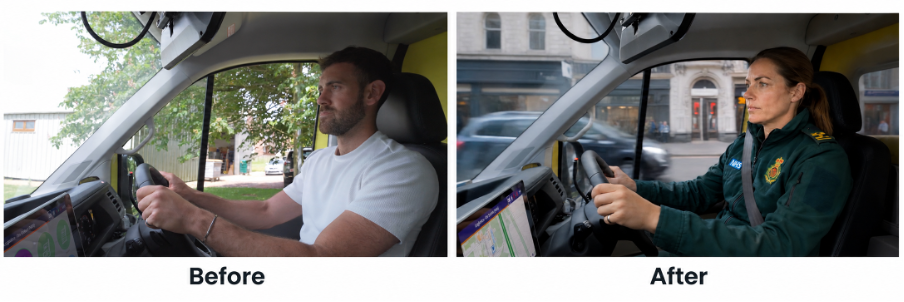
The ambulance presented an additional challenge. We had a real vehicle but weren’t allowed to drive it. I filmed my client pretending to drive, with the vehicle going precisely nowhere.
I then used AI to replace the static Hampshire fields outside the windows with the moving streets of central London, and to replace my male client with a female paramedic in uniform.
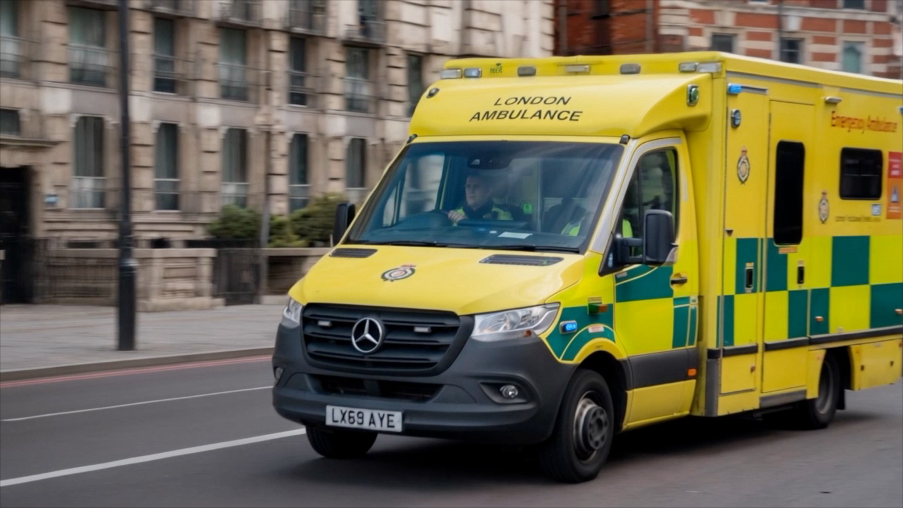
We also needed exterior shots of the ambulance on the road. I tried sourcing library footage, but everything I found was too far away or in the wrong location. Once again, AI came up with the goods.
The roadside recovery vehicle presented the biggest challenge. We had neither a vehicle nor a driver to film. The library footage featured recognisable organisations, while we wanted a fictitious company.
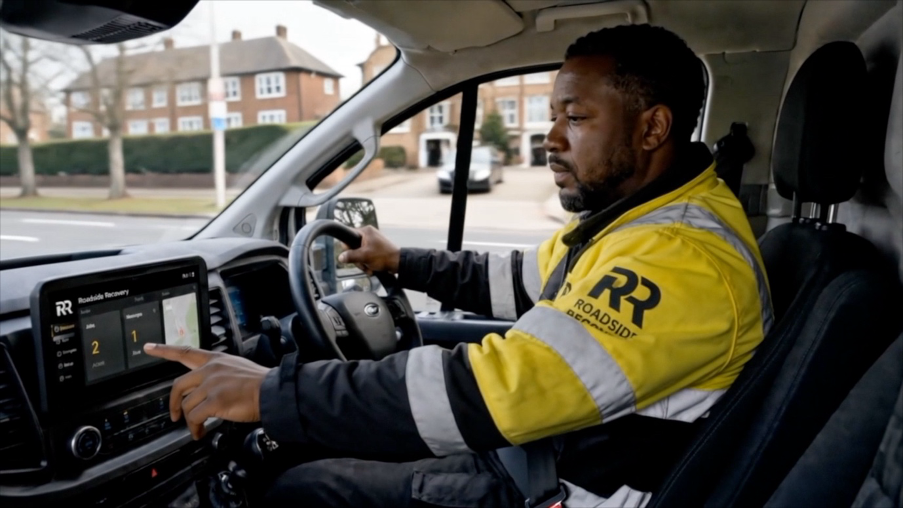
For that sequence, AI created the van, its interior, our driver and the fictitious touchscreen software he used.
Finishing touches
There were smaller changes too. In an interior detail shot, I replaced the workshop visible through the windscreen with a white studio. In a moving exterior tracking shot, I transformed a fully liveried police car into its civilian version.
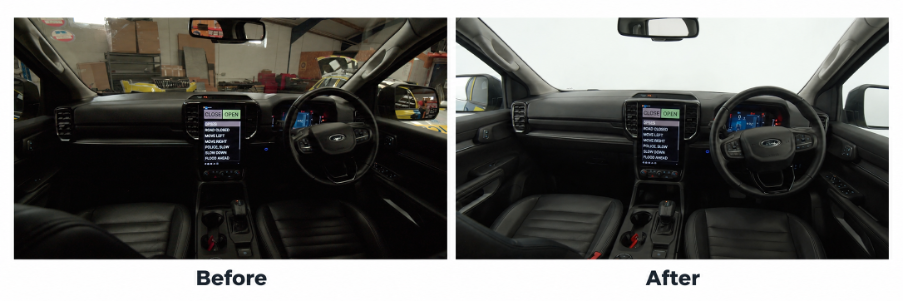
These were details I could now address rather than accept as production compromises.
The work involved
I’d be lying if I said it was all plain sailing.
It took days of trial and error, burning through hundreds of pounds of AI credits. Knowing how to prompt the tools, and which model to use for which job, was a skill in itself.
I used at least five different AI models, including language models and still-image generators. Plenty of the results were unusable, and at times I needed traditional video compositing techniques to achieve what I wanted.
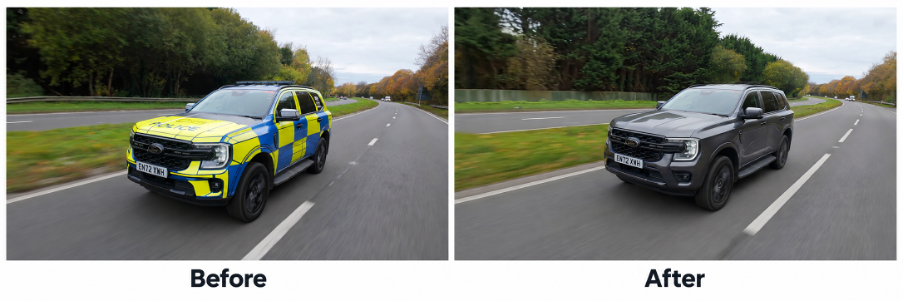
It took perseverance, but we got there. The client and I are very happy with the result.
Still directing
For me, using AI was creatively liberating.
Without it, we would still have produced good, effective films. We would have kept the drivers out of shot, made the best of the available library footage and accepted a workshop in the background of some shots.
With AI, I could realise my vision much more accurately within the resources we had.
The process also felt surprisingly natural. I still needed to decide on framing, performance and what each shot needed to communicate. I had to assess the results, recognise what wasn’t working and find a way to get there.
For those sections, I was directing an AI model. My experience as a director still felt very relevant.
I wrote the treatment and edited the videos in the same way I normally would. Generative AI expanded what I could create in between, helping me deliver films that came closer to my original vision.
Could AI help you?
If you’d like to explore how generative AI could help your budget go further or make an ambitious shot possible, we’d love to discuss your project.
This is a new and exciting period in film production, and we can help you put these techniques to practical use.
Call us on 01252 506074 or email me at [email protected].